 Specialty
 Intensive Care Medicine
 Pediatrics & Neonatology
 Occupational Medicine
 Emergency Medicine
 Anesthesiology
 Pulmonology
 Internal Medicine
 Radiology
 Nephrology
 Allergy and Immunology
 Sports Medicine
 Nutrition
 Neurosurgery
 Cardiovascular medicine
 Surgery
 Gynecology
 Companies
 Departments
 Cardiac Rehabilitation
 Imaging Department
 OB/GYN Department
 Dialysis Department

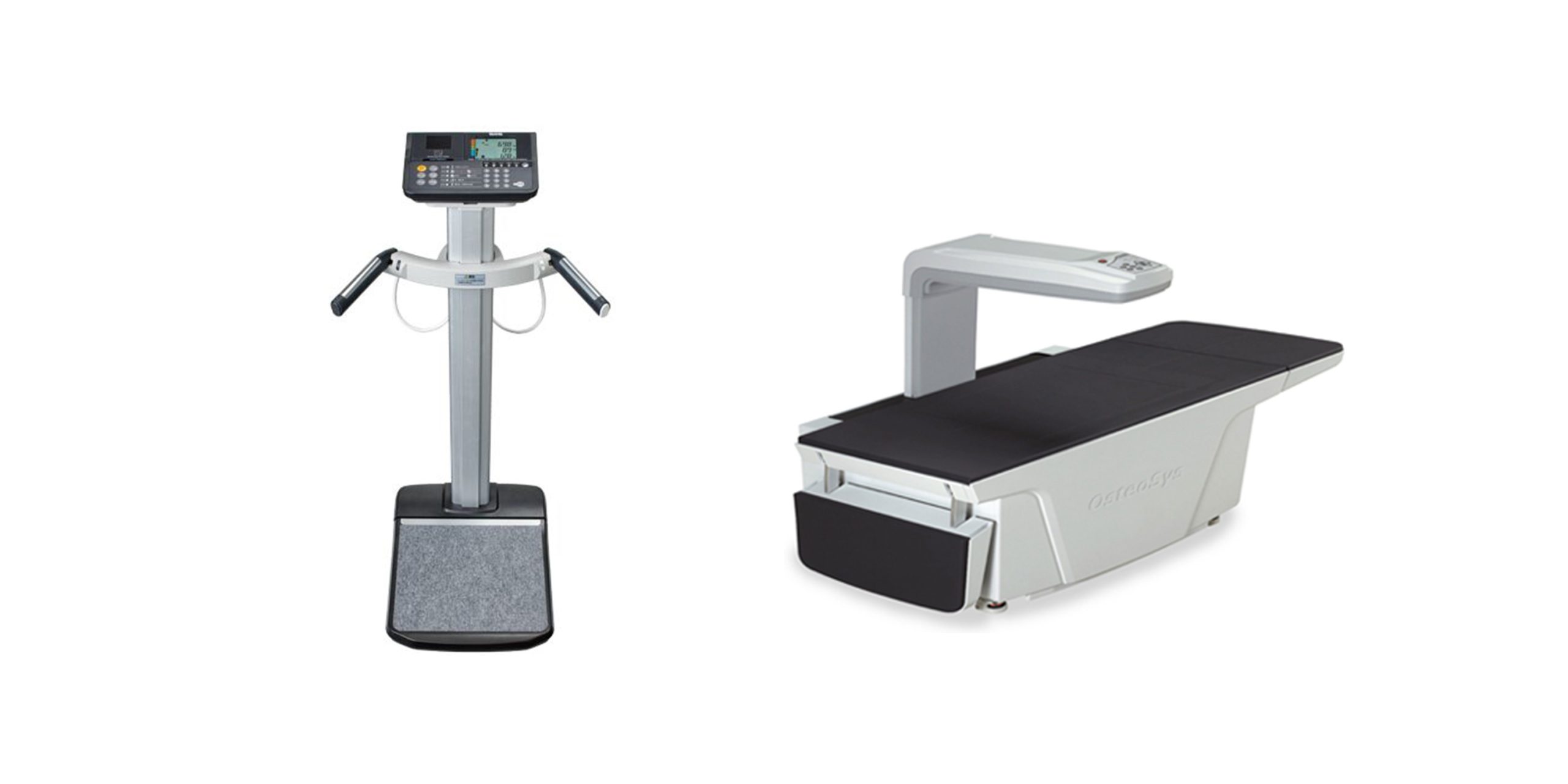
Body composition analysis is a valuable tool for assessing and monitoring the nutritional status of children with spinal muscular atrophy (SMA). This study was designed to compare the consistency of bioelectrical impedance analysis (BIA) and dual-energy X-ray absorptiometry (DXA), as the gold standard method for assessing body composition in clinical practice when treating children with type II and III SMA.
Methods
From 2019 to 2021, we performed a retrospective analysis of body composition by DXA and BIA measurement methods in patients with type II and III SMA treated at a Chinese tertiary children’s hospital. Fat mass (FM), muscle mass (MM), bone mineral content (BMC), and visceral fat area (VFA) were compared using paired sample t-tests. We calculated Lin’s concordance correlation coefficient (CCC) and Spearman correlation coefficient to verify the correlation between DXA and BIA measurements. Bland–Altman analysis was used to assess the consistency of the two methods.
The current updated consensus statement for the standard of care in SMA children highlighted multidisciplinary team (MDT) care is devoted to reducing complications and potentially improving patients’ and caregivers’ quality of life. Furthermore, it emphasizes the importance of individualized nutrition support, which is probably indispensable given the rapid development of gene-targeted and disease-modifying drug therapies.Nevertheless, assessing body composition using weight or body mass index (BMI) may be misleading because children with SMA have imbalanced muscle mass (MM) and fat mass (FM), which contribute to inaccurate individually designed energy prescriptions based on the results measured using estimating equations. Accurate assessments of body composition are critical components of comprehensive nutritional assessments and have been proven to guide individualized nutrition management and help improve clinical outcomes.
There are numerous methods for determining body composition, ranging from simple indirect measures, such as calipers (skinfold thickness), to sophisticated and noninvasive instruments, such as computed tomography (CT), ultrasound, bioelectrical impedance analysis (BIA), and dual-energy X-ray absorptiometry (DXA).
BIA measurements rely on the principle that the body’s water, FM, and MM have different impedance or resistance values for a small electric current, with lower impedance in adipose tissue and higher impedance in the muscle area. MF-BIA has higher accuracy and reliability for estimating body composition and can estimate bone mineral content (BMC).
Despite the limitations and confounding influences of all body composition methods, DXA is frequently regarded as a reference method for evaluating BMC, FM, and MM. However, DXA has limitations because it is not portable and expensive and frequently requires training and operation by licensed technicians because of the small amount of potential radiation exposure. In contrast, BIA is relatively simple to operate, quick, inexpensive, non-invasive, and can be used in most environments without the need for highly trained personnel. Previous studies have shown that BIA has a good consistency for measurements of fat mass in both healthy and obese people
This present study compared the concordance between the BIA device and the current gold-standard DXA device on the measurement of body composition in children with SMA for the first time. We put forward that, although BIA overestimates the MM, BMC, and VFA, and underestimates the FM in SMA, compared with DXA, both of them have good consistency for measuring MM and FM, especially in patients with type III. Hence, BIA could be considered as a portable, simple-to-use, and appropriate method for body composition measurement to guide clinical nutritional assessment in patients with SMA, particularly when measuring MM and FM. Studies have compared body composition measurements assessed using BIA and DXA in various populations, including healthy individuals, athletes, overweight and obese children, and adults. These studies showed that MF-BIA can underestimate FM and overestimate fat-free mass in an obese population compared with DXA. However, because SMA is a rare neuromuscular disease, few studies have focused on children with SMA. A study involving a small sample of children with SMA found that BIA determined using Cordain’s equation has high sensitivity and specificity for screening overweight people. We also discovered findings of studies on other primary neuromuscular diseases. Consistent with our research, L. Ellegard’s study showed that children with primary neuromuscular disorders had proportionally more FM and less MM than the general population, regardless of normal or abnormal BMI, and that MF-BIA overestimated MM with a systematic bias. Another French study found no significant differences between BIA and DXA estimates, and they could be used to follow-up the dynamic changes in the nutritional status of ambulatory pediatric patients with Duchenne muscular dystrophy. Similar findings were reported using labeled water dilution (WD) as the reference method.
Conclusion
To sum up, BIA overestimates MM and underestimates FM, BMC, and VFA in children with type II and type III SMA, compared with the gold standard DXA measurement. Apart from this, FM and MM measured by BIA and DXA in children with type II and III SMA are in good agreement, whereas BMC and VFA are not, and this consistency is more obvious in children with type III than that in children with type II. In a word, BIA is considered to be a non-invasive, easy-to-use, and repeatable measuring tool for monitoring FM and MM, which is expected to be widely used in children with SMA in clinical practice.